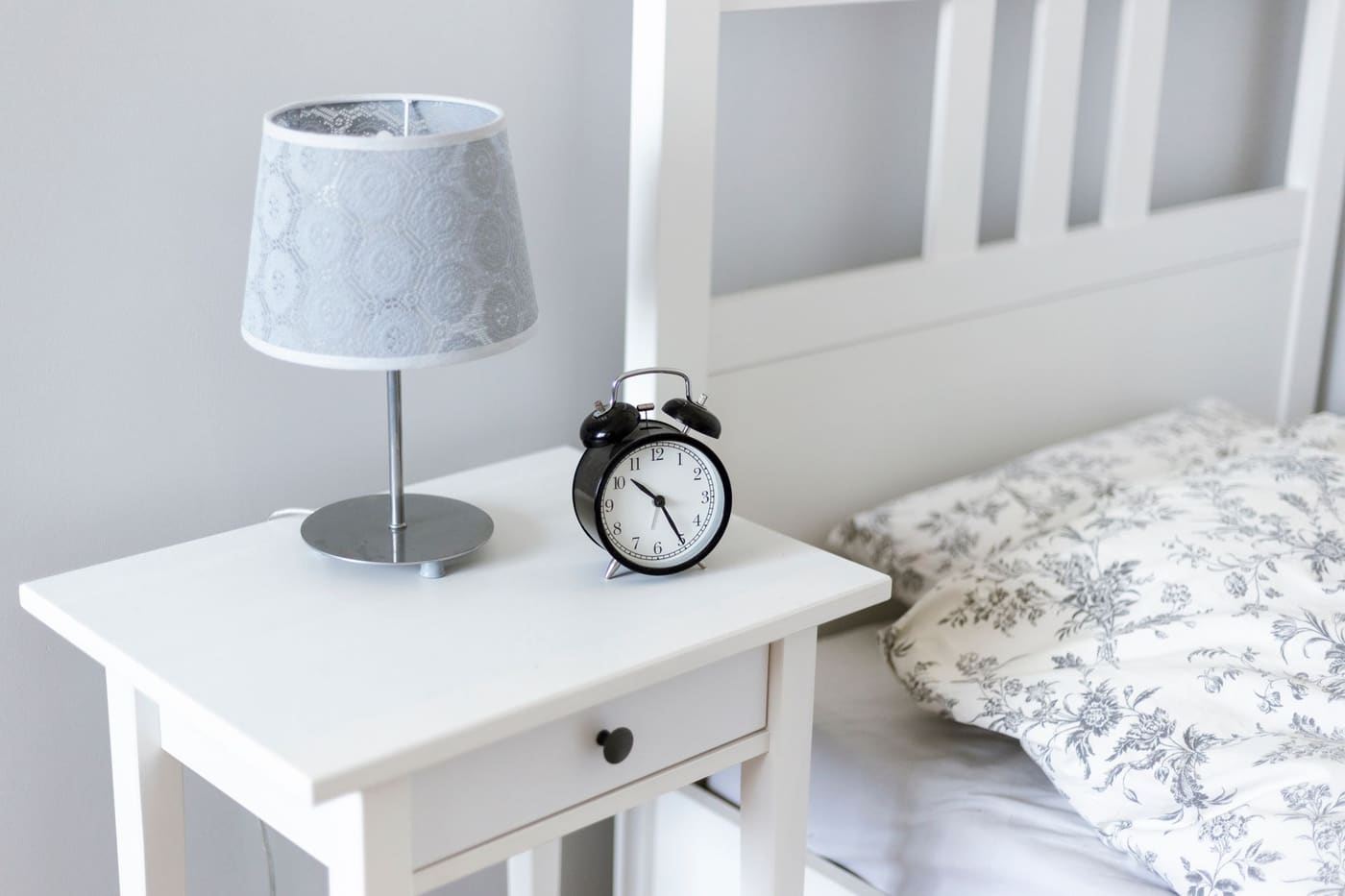
The sleep tips that help most are the plain ones: a consistent wake time, daylight early in the day, a cool dark quiet bedroom, sensible limits on caffeine and alcohol, and a wind-down that lowers stimulation. These are the same basics that the CDC and other health bodies list under sleep hygiene. Gadgets, supplements and “hacks” add little on top of them. If you change only a few things, change these, in roughly this order.
Most online lists give 30 tips with no ranking, which is not much help. This page orders them by how much they usually matter. For what sleep quality means and how to judge your own, see how to improve sleep quality.
Tip 1: Fix your wake time first
Your body clock runs on repetition, so a fixed wake time, weekends included, is the most useful anchor. Bedtime is hard to control because you cannot force sleepiness, but you can always choose when you get up. A common guideline is to stay within about an hour of your usual wake time every day.
Large weekend shifts create what is often called social jet lag: a mismatch between your weekday and weekend sleep timing that can leave you groggy early in the week. For illustration, if you get up at 6:30 a.m. on weekdays and sleep until 10:00 on weekends, your body clock is effectively pushed later each weekend and dragged back on Monday. A compromise such as getting up an hour or so later on weekends, going outside for light soon after, and napping briefly in the early afternoon if needed gives your clock much less to correct.
Tip 2: Get bright light early, and dim it later
Light is the strongest signal your body clock uses. Outdoor light, even on an overcast day, is much brighter than typical indoor lighting.
- Morning: Spend some time outside in the first hour or two after waking if you can. This helps anchor your rhythm.
- Evening: Lower the overhead lights in the last hour or two before bed. Lamps are easier on your system than a bright ceiling fixture.
- Screens: Content and brightness probably matter as much as the color of the light. A gripping video at full brightness is more alerting than a dull one on a dim screen.
The mechanism is covered in how circadian rhythm works.

Tip 3: Make the bedroom cool, dark and quiet
Your body temperature drops as you fall asleep, and a cooler room supports that. The CDC lists a dark, quiet, relaxing and comfortable bedroom among its basic sleep recommendations. Personal preference varies, so adjust to what lets you sleep without feeling hot.
Cheap steps first:
- Cover or remove small standby lights. This is free and often effective.
- Silence notifications and keep the phone out of reach.
- Use curtains or a sleep mask if street light or early sun wakes you.
- Try earplugs or a steady fan or soft background sound. A constant sound can mask sudden noises better than silence does.
If a partner’s loud snoring or noise you cannot control interrupts your sleep, deal with that cause directly rather than buying more gear. Loud snoring in a partner or yourself can be a sign of a breathing problem; see common signs of sleep apnea.
Tip 4: Time caffeine and alcohol carefully
Caffeine can stay in your body for hours, and sensitivity varies a lot between people. A sensible experiment is to stop caffeine earlier in the day, for example after early afternoon, for two weeks and see whether falling asleep gets easier. Tea, cola, energy drinks, chocolate and some pain relievers also contain caffeine.
Alcohol is trickier because it can make you feel sleepy faster. But it tends to fragment sleep later in the night and can worsen snoring and breathing problems in some people. The CDC advises avoiding caffeine and alcohol close to bedtime, and leaving a gap of a few hours between your last drink and bed is a common suggestion.
Tip 5: Build a real wind-down
Your brain does not switch from busy to asleep on command. A wind-down gives it a ramp. It does not need to be elaborate: half an hour to an hour of low-key activity in dim light is plenty.
- Reading a paper book, or an e-reader at low brightness
- A warm bath or shower in the evening, which some people find helps them feel sleepy as they cool down afterward
- Light stretching, quiet music or a podcast
- Writing tomorrow’s to-do list so it is out of your head

Avoid work email, news and arguments in this window. If your mind races at bedtime, a short written “brain dump” earlier in the evening works better than trying to solve problems in bed. The guide to why you cannot fall asleep at night goes deeper on racing thoughts.
Tip 6: Keep the bed for sleep, and get up if you are awake
When you lie awake in bed repeatedly, your brain can start to link the bed with alertness and frustration. A standard behavioral technique, called stimulus control and used in CBT-I, is to go to bed only when sleepy and, if you are awake and getting frustrated, get up and do something quiet in dim light until sleepiness returns. Avoid watching the clock; a rough sense of time is enough.
In practice:
- Go to bed when you feel sleepy, not just tired. Heavy eyelids and nodding off are sleepiness. Feeling drained but mentally wired is not.
- If you are awake and frustrated, get up and sit somewhere else with a dim lamp.
- Do something quiet and mildly dull, such as reading. Avoid screens and anything that needs decisions.
- Go back to bed when sleepiness returns. Repeat as needed, and keep your wake time fixed whatever happened overnight.
It can feel counterproductive for the first week or so, because you may get up several times. The aim is to rebuild the link between bed and falling asleep, which takes repetition. If you wake in the early hours specifically, see what to do if you wake up too early and cannot fall back asleep.
How to tell what is working
If you change five things at once, you will not know which helped. Pick two or three tips, keep them for about two weeks, and note how long it takes to fall asleep and how you feel at midday. Then add one change at a time. A note on paper is enough.
Tips that are overrated or need caution
| Tip | Realistic view |
|---|---|
| Sleep tracking apps and rings | Useful for spotting patterns in timing, but their sleep stage estimates are approximate. Checking scores can raise anxiety. |
| Melatonin | The NIH’s National Center for Complementary and Integrative Health notes that it is widely used and that supplement products vary in content. It acts more as a timing signal than a sedative. Ask a pharmacist or doctor before using it, especially for children, in pregnancy, or with other medicines. |
| Magnesium and herbal teas | The evidence is limited or mixed. They are not a fix for a schedule or stress problem. |
| Napping | A short nap earlier in the day suits many people. Long or late naps can make night sleep harder. |
| “Catching up” on weekends | May help a little with a deficit, but large schedule swings undo some of the benefit. |
When to see a doctor
Tips help ordinary poor sleep. They are not designed for sleep disorders or medical problems. Talk to a doctor if:
- You have struggled with sleep at least three nights a week for three months or more.
- You snore loudly, gasp, or have been told you stop breathing during sleep.
- You feel an uncontrollable urge to move your legs at night, or you act out your dreams.
- You fall asleep at dangerous times, such as while driving. Do not drive while this is happening.
- Low mood, anxiety or hopelessness comes with your sleep problems.
Seek urgent help for chest pain or severe shortness of breath. If you are having thoughts of harming yourself, contact your local emergency number or a crisis line in your country right away.
To go through the environment tips one by one, use the sleep environment checklist.
Where this comes from
The tips follow the CDC’s sleep hygiene recommendations, the NIH’s National Heart, Lung, and Blood Institute guidance on healthy sleep habits, and the behavioral techniques used in cognitive behavioral therapy for insomnia, which the American Academy of Sleep Medicine and the American College of Physicians recommend as first-line insomnia treatment. The note on melatonin follows the NIH’s National Center for Complementary and Integrative Health. This is general information, not medical advice, and it was reviewed on 7 October 2026. Check the source organizations for their current guidance.